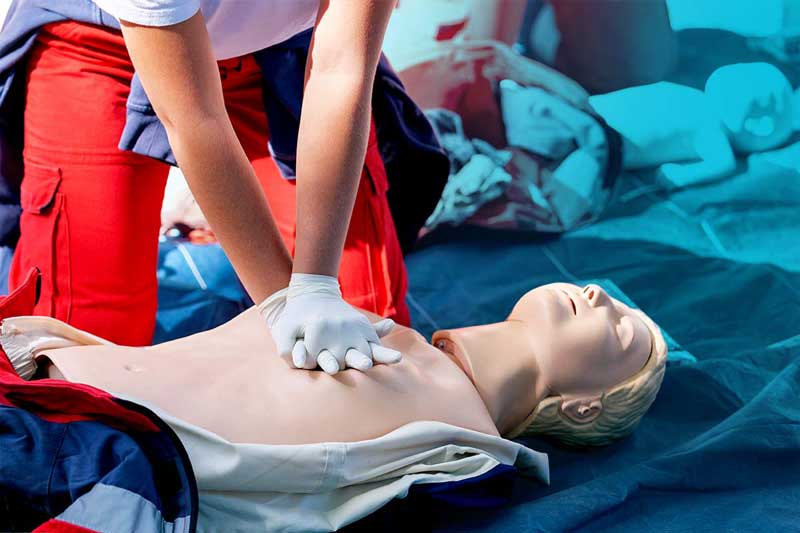
Basic Emergency First Aid Responder

R1 450,00

The purpose of the skills programme is to build the capacity of a person to function as a Basic First Aid provider.

Contact Learning
2 Days
NQF level 2 / 2 Credit
QCTO

Year-round enrolments
Contact Learning

Type: Year-round enrolment

R1,450.00

Price excluded a non-refundable admin fee of R400. A membership fee of R300 can be added to your payment,

Register now

Knowledge Modules
• Presented in class
(contact learning full time or part time on campus)
• Self-paced online (online learning platform)

Application Skills Modules
• Presented on campus
(contact learning full time or part time on campus)
• Presented on campus (in workshop format, twice per semester in
block format, on Saturday mornings)

  • Open Access
  • Recognition of Prior Learning (RPL)
    Note: You can apply for special admission
    but need to meet specific requirements that
    will be discussed on a case-by-case basis
    with the academic department. Admission
    is subject to specific conditions being met.
  • Safety and security industry: All private security companies and public entities require their
    personnel to have basic first aid training.
  • Hospitality industry: Hotels, resorts and event management companies often require staff to
    have basic first aid training.
  • Sports and recreation industry: Gyms, sports clubs and adventure tourism companies may
    require staff to have basic first aid training.
  • Overall, a person with a basic level First Aid certificate has a wide range of occupational
    opportunities in various industries. They can work in both the private and public sectors, and
    their skills and knowledge are highly valued in emergency response and safety-related fields.

The purpose of the skills programme is to build the capacity of a person to function as a Basic First Aid provider.

Basic First Aid providers respond to emergency situations to provide efficient and immediate basic medical care to ill and injured persons during emergencies.

They use a limited range of equipment and operate within common and uncommon situations providing a basic first aid care service that falls within a strictly regulated scope of work as defined by various regulatory requirements. Incumbents are also expected to continually remain updated on approved new practices and techniques.

  • Classes on Saturday’s with a Practical Component

Accreditations

Delivery Method

Duration

NQF level

Knowledge Modules
• Presented in class
(contact learning full time or part time on campus)
• Self-paced online (online learning platform)

Application Skills Modules
• Presented on campus
(contact learning full time or part time on campus)
• Presented on campus (in workshop format, twice per semester in
block format, on Saturday mornings)

  • Open Access
  • Recognition of Prior Learning (RPL)
    Note: You can apply for special admission
    but need to meet specific requirements that
    will be discussed on a case-by-case basis
    with the academic department. Admission
    is subject to specific conditions being met.
  • Safety and security industry: All private security companies and public entities require their
    personnel to have basic first aid training.
  • Hospitality industry: Hotels, resorts and event management companies often require staff to
    have basic first aid training.
  • Sports and recreation industry: Gyms, sports clubs and adventure tourism companies may
    require staff to have basic first aid training.
  • Overall, a person with a basic level First Aid certificate has a wide range of occupational
    opportunities in various industries. They can work in both the private and public sectors, and
    their skills and knowledge are highly valued in emergency response and safety-related fields.

The purpose of the skills programme is to build the capacity of a person to function as a Basic First Aid provider.

Basic First Aid providers respond to emergency situations to provide efficient and immediate basic medical care to ill and injured persons during emergencies.

They use a limited range of equipment and operate within common and uncommon situations providing a basic first aid care service that falls within a strictly regulated scope of work as defined by various regulatory requirements. Incumbents are also expected to continually remain updated on approved new practices and techniques.

  • Classes on Saturday's with a Practical Component
Accreditations

Delivery Method

Duration

NQF level